What to Look for When Choosing Heavy Equipment Installation Experts for Your Facility
Installing heavy industrial equipment is a significant investment that can influence productivity, safety and operational efficiency for years to come. Whether a business is expanding its production capacity, upgrading ageing machinery or building a new facility, successful installation depends on much more than simply positioning equipment in the correct location. Careful planning, technical knowledge and precise execution all play a vital role in ensuring machinery performs as intended from the moment production begins.
Selecting the right heavy equipment installation experts is therefore one of the most important decisions during any industrial project. Experienced specialists bring far more than lifting equipment and manpower. They provide engineering knowledge, project management skills and practical experience that help reduce risk, avoid unnecessary delays and protect valuable machinery throughout the installation process.
Experience with Similar Equipment
Industrial facilities use a wide variety of machinery, each with its own installation requirements.
Some equipment requires extremely accurate positioning, while other systems involve complex electrical, hydraulic or pneumatic connections. Businesses should therefore look for installation teams that have direct experience working with equipment similar to their own rather than relying solely on general lifting or moving capabilities.
Specialists who understand the operational requirements of particular machines are often better equipped to anticipate challenges before they become problems, resulting in a smoother installation process.
Comprehensive Project Planning
Successful installations begin well before equipment arrives on site.
Professional installation experts typically carry out detailed site assessments, reviewing building access, floor loading, utility requirements and available working space. They also develop comprehensive installation schedules that coordinate deliveries, lifting operations and commissioning activities.
Effective planning reduces the likelihood of unexpected delays while ensuring every stage of the project supports the next. It also allows potential obstacles to be identified early, giving everyone involved sufficient time to develop appropriate solutions.
A Strong Focus on Safety
Installing heavy machinery involves significant hazards if work is not carefully managed.
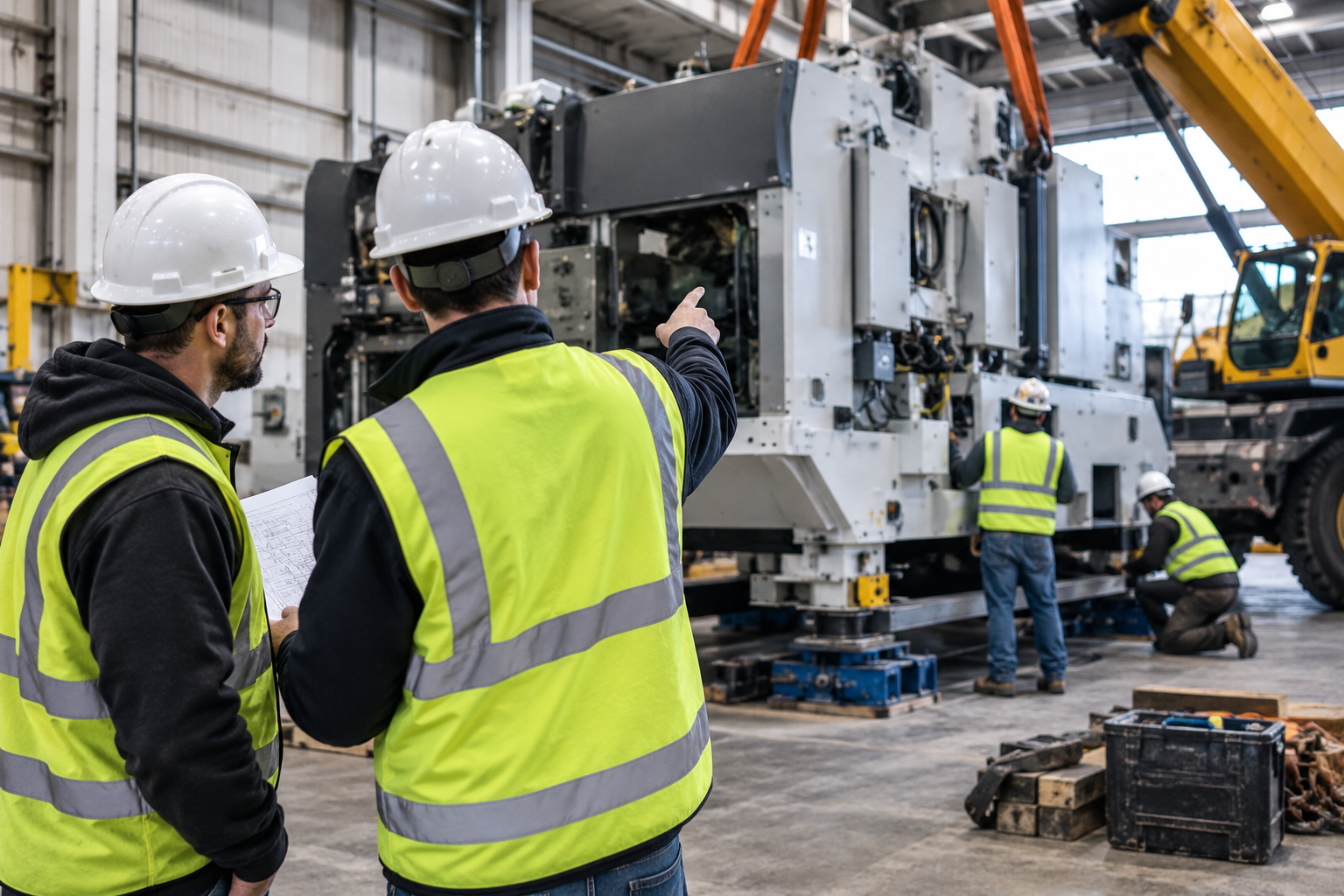
Lifting operations, working around large equipment and coordinating multiple contractors all require robust safety procedures. Experienced installation teams carry out risk assessments, prepare method statements and ensure appropriate lifting equipment is used throughout the project.
Businesses should also look for contractors with a strong safety culture, where compliance is viewed as an integral part of delivering quality work rather than simply meeting regulatory requirements.
A well-managed installation protects both people and equipment while reducing the risk of costly project interruptions.
Engineering Knowledge
Heavy equipment installation is often an engineering exercise rather than simply a logistical one.
Machinery may require accurate levelling, precision alignment and specialist anchoring before utilities can be connected. Some systems must meet strict manufacturer tolerances to ensure reliable operation and maintain warranty conditions.
Installation experts with engineering expertise understand these technical requirements and have the equipment needed to achieve the required level of precision. Their knowledge helps minimise future maintenance issues while supporting long-term operational performance.
Effective Communication Throughout the Project
Industrial projects often involve numerous stakeholders, including equipment manufacturers, contractors, facility managers and internal engineering teams.
Strong communication helps ensure everyone remains informed as the project progresses. Installation specialists should provide regular updates, explain any changes to the schedule and respond promptly when questions arise.
Good communication also enables quicker decision-making if unexpected challenges occur, reducing delays and helping the project remain on schedule.
The Right Equipment for the Job
Different installation projects require different lifting solutions.
Depending on the size and weight of the machinery, specialists may use cranes, gantries, hydraulic skates, jacking systems, forklifts or other specialised equipment. The correct combination depends on site conditions, available access and the characteristics of the machinery being installed.
Experienced contractors assess these factors carefully rather than applying the same approach to every project. This flexibility improves both efficiency and safety throughout the installation process.
Coordination with Other Project Teams
Equipment installation rarely takes place in isolation.
Electrical contractors, mechanical engineers, builders and commissioning specialists may all be working on the same project simultaneously. Installation experts who are accustomed to coordinating with multiple disciplines can help maintain an organised workflow while avoiding unnecessary disruption between contractors.
This coordinated approach often shortens overall project duration because work progresses in a logical sequence rather than through conflicting activities.
Proven Track Record
Past performance is often one of the strongest indicators of future reliability.
Businesses should consider reviewing previous projects, client testimonials or case studies where available. Experience across different industries can also demonstrate an installation team’s ability to adapt to varying operational requirements and technical challenges.
A contractor with an established reputation for delivering projects safely, efficiently and on schedule provides greater confidence that complex installations will be completed successfully.
Support Beyond Installation
The completion of physical installation does not necessarily mark the end of the project.
Many organisations benefit from contractors who assist with final alignment checks, commissioning support, testing and troubleshooting before production begins. Ongoing support during the early stages of operation can help identify minor issues before they develop into more significant problems.
Working with specialists who remain engaged until equipment is operating successfully contributes to a smoother transition into full production.
Choosing the Right Partner
Selecting heavy equipment installation experts should involve far more than comparing quotations. The quality of planning, engineering expertise, communication and project management can have a lasting impact on both operational performance and overall project costs.
By choosing experienced professionals with proven technical capabilities, strong safety standards and a collaborative approach, businesses place themselves in a far stronger position for a successful installation. The right team not only ensures equipment is installed correctly but also helps minimise disruption, protect valuable assets and create the conditions for reliable production from day one.