The Chicago Homebuyer’s Block-by-Block Checklist: What to Test Before Making an Offer in Illinois
A polished listing can make nearly any Chicago home feel like the right one. Before making an offer, however, buyers need to evaluate more than square footage, finishes, and asking price. The home, its building, the immediate block, and the routines it supports all deserve a closer look. For buyers comparing condos, townhomes, and single-family properties on the North Side, browsing homes for sale in Lincoln Park can be a useful starting point to see how property types, layouts, and locations vary within a single neighborhood. Millie Rosenbloom is a Chicago real estate professional based in Lincoln Park, and her neighborhood-focused search page combines active listings with local context for buyers evaluating Lincoln Park and nearby Chicago areas.
Start With Your Actual Daily Routine
Begin with the life you live now, not a list of ideal features. Write out a typical weekday from morning through evening, then test every property against it. Consider your commute route, access to CTA trains or buses, grocery and pharmacy stops, school needs, parks, fitness options, and the space required for remote work, guests, hobbies, or children. Parking deserves an honest answer as well. A garage space, deeded outdoor spot, permit parking, and regular street parking are not interchangeable. Decide how much time, cost, and uncertainty you are willing to accept before viewing homes.
Visit the Block More Than Once
A daytime showing offers only one version of a Chicago block. Return at different times to observe conditions that may affect daily comfort.
- Visit during a weekday morning to assess traffic and transit activity.
- Return around evening rush hour to see congestion, noise, and parking pressure.
- Walk the area after dark to evaluate lighting and the general feel of the route home.
- Stop by on a weekend, when nearby businesses, parks, and residential streets may function differently.
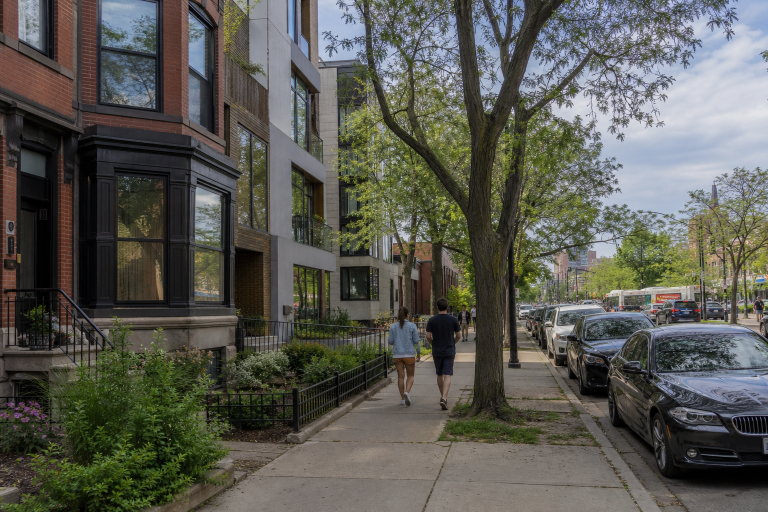
Walk at least a block or two in each direction. Notice construction activity, delivery traffic, train noise, late-night businesses, vacant lots, alley access, and the amount of available curb space. A home can be appealing even when the surrounding routine doesn’t match.
Calculate the True Monthly Cost
The purchase price is only one part of affordability. Ask your lender for a property-specific estimate that includes mortgage principal and interest, property taxes, and insurance. Condo and townhome buyers should also include monthly assessments, while all buyers should account for utilities, parking, routine upkeep, and a reserve for future repairs. Do not assume that a lower assessment automatically makes one condo a better value. An association with limited reserves or major work ahead may need to raise assessments or approve a special assessment later. Request current information rather than relying on a listing description alone.
Check the Building Before Falling for the Interior
New countertops and fresh paint cannot answer questions about water, structure, or aging systems. During showings, look past the staged rooms and ask about roof work, masonry maintenance, windows, heating and cooling equipment, plumbing, electrical updates, and any signs of basement moisture. In multi-unit buildings, also examine shared areas. Elevators, hallways, laundry rooms, storage spaces, bike rooms, package areas, and parking arrangements can shape ownership just as much as the unit itself. Available permit records and major improvement history can help put recent work into context.
Read Condo and Association Records Carefully
For a condo purchase, the association is part of the investment. Review the budget, reserve balance, assessment history, insurance information, recent board meeting notes, and any planned work involving the roof, facade, balconies, plumbing, or elevators. Ask about pending special assessments and whether the association has discussed projects that could affect costs. Rules matter, too. Confirm policies for pets, rentals, renovations, move-ins, storage, and use of outdoor areas. A rule that seems minor before closing may have a meaningful effect on how you live in the home afterward.
Use Comparable Sales and Inspections as Decision Tools
Comparable sales work best when the homes are genuinely alike. Compare similar property types on nearby blocks when possible, then adjust for parking, outdoor space, floor level, condition, updates, and building amenities. A renovated condo with parking is not a direct match for an unrenovated unit without parking, simply because both have two bedrooms. An inspection is equally useful when treated as a budgeting tool rather than a pass-or-fail test. A general inspection may identify issues that call for a sewer scope, a radon test, a structural evaluation, a roofing review, or another specialist. Obtain repair estimates when appropriate, then decide whether the concern is manageable, negotiable, or beyond your comfort level.
Confirm Zoning, Permits, and Future Change
Before committing to a home with a finished basement, an additional unit, a rooftop plan, or a future addition in mind, verify what is legal now and what may be permitted later. Review renovation permits, ask about historic or landmark restrictions, and investigate nearby construction proposals. Understanding setbacks, overlays, and other zoning restrictions can help buyers understand why these rules matter when evaluating both a property and its surroundings.
Review Assistance and Ownership Resources
Some buyers may qualify for buyer education, financing, or down-payment assistance, but eligibility and program terms should be confirmed before they influence an offer strategy. The Chicago homeownership resources page provides a starting point for exploring local tools related to buying, maintaining, and owning a home.
Quick Offer-Readiness Checklist
- Monthly payment reviewed with taxes, insurance, assessments, and parking.
- Commute and everyday errands tested from the property.
- Block visited multiple times during the day.
- Building systems, permits, and visible maintenance reviewed.
- Association documents examined, when applicable.
- Comparable sales reviewed with meaningful differences in mind.
- Inspection plan and repair reserve prepared.
- Lender and attorney questions answered before submitting the offer.
Common Buyer Questions
How many times should a buyer visit a home?
When possible, schedule a full showing and a follow-up visit. The second visit can reveal storage limits, changing light conditions, street noise, traffic, or concerns that were missed during the first tour.
Should buyers choose the neighborhood or the home first?
It depends on the non-negotiables. A fixed commute, school requirement, or preferred lifestyle may make location the first filter. Other buyers may begin by selecting a property type and comparing several Chicago neighborhoods.
Are older Chicago homes always riskier?
No. Age alone does not determine condition. Maintenance history, drainage, renovation quality, building systems, and inspection findings are more useful indicators.
Make the Offer Fit the Life
The best Chicago purchase is not always the most polished listing. It is the home that fits your budget, routine, risk tolerance, and longer-term plans. A block-by-block review creates clearer expectations before you commit and helps reduce avoidable surprises after closing.
Conclusion
The right Chicago home is about more than an attractive interior or competitive asking price. Buyers should consider how the property, building, immediate neighborhood, and surrounding services will support everyday life after closing. Testing commutes, visiting the block at different times, reviewing total ownership costs, and examining building or association records can uncover details that a polished listing may not reveal. Inspections, comparable sales, zoning research, and permit reviews can also provide a clearer picture of potential risks and future expenses. By evaluating each property with the same practical criteria, buyers can make more confident decisions and avoid letting attractive finishes overshadow important concerns. Whether choosing a condo, townhome, or single-family home, the strongest purchase is one that balances comfort, convenience, financial responsibility, and long-term flexibility.