The Role of Personalization in the Modern Luxury Driving Experience
Introduction
Luxury cars have always been synonymous with refinement, but the landscape is evolving beyond high-quality materials and innovative engineering. Today’s drivers crave a deeper level of connection with their vehicles, one that aligns with their distinct personalities and routines. As a result, personalization is emerging as a defining characteristic of the modern luxury driving experience, setting new standards for what it means to own a premium automobile. For buyers seeking that bespoke experience, options like a Bentley dealer near me illustrate how tailored luxury has become accessible to a new generation of enthusiasts.
Personalization not only differentiates a luxury vehicle from its standard counterparts but also provides drivers with a sense of ownership unlike any other. In a world where customization is highly valued from fashion to technology, the automotive sector is rapidly adapting, making personalization a crucial aspect of the contemporary luxury car market.
The Evolution of Luxury Car Customization
Luxury vehicles have historically captivated owners through exclusivity, meticulous craftsmanship, and superior performance. Over time, however, expectations shifted toward customization that goes beyond standard options, prompting automakers to rethink how they deliver value. This shift can be traced to changing consumer attitudes, in which bespoke experiences and individual expression are highly sought after. Today’s luxury brands offer extensive options, from personalized paint schemes to unique interior trims, allowing drivers to define every aspect of their car.
Such advancements have not only influenced the luxury market but have also paved the way for broader trends in the automotive industry, including features once reserved for the elite becoming available in more mainstream models. This cascading effect further emphasizes the leading role luxury vehicles play in setting industry benchmarks. According to Forbes, the growing demand for personalization is also influencing automaker strategies across the board.
Technological Advancements Facilitating Personalization
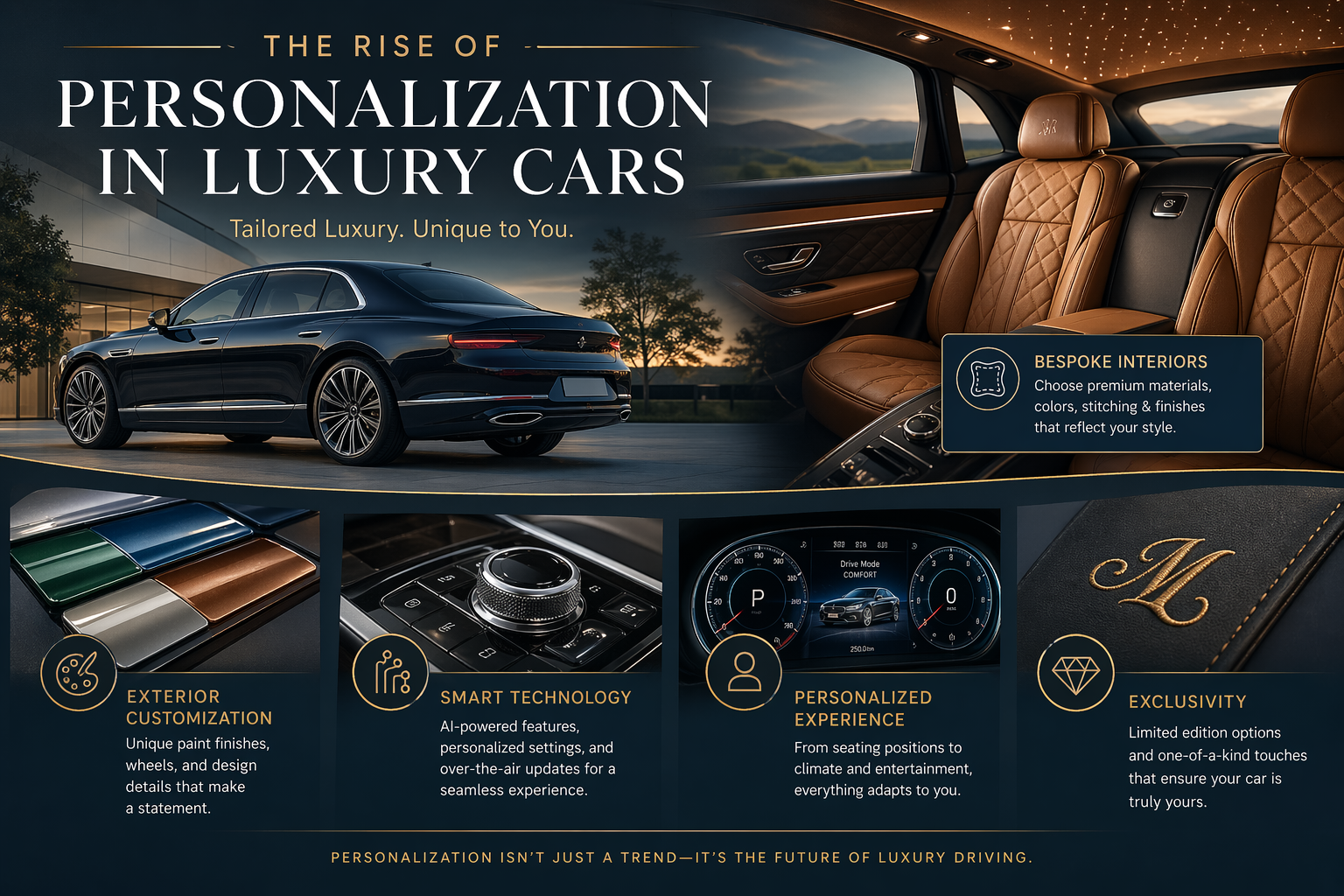
The integration of advanced technologies has made luxury car personalization more intuitive and seamless than ever before. Artificial intelligence now empowers vehicles to adjust cabin temperatures, drive modes, and entertainment preferences based on the user’s routines and habits. Modern infotainment systems, powered by voice recognition and machine learning, help drivers interact with their cars in highly individualized ways.
Over-the-air software updates have revolutionized user control, enabling features to be upgraded long after the initial purchase. Adaptive driver assistance and smart navigation systems can learn from frequent trips or favorite settings, creating a dynamic experience that evolves with the driver’s needs. The automotive industry’s commitment to digital customization is highlighted by insights from Forbes, which showcase the ongoing transformation in how drivers interact with their vehicles.
Interior Customization: Crafting Bespoke Driving Spaces
The attention to detail in luxury car interiors has reached new heights, with automakers offering clients the ability to design a truly bespoke driving environment. Owners can choose from a variety of high-quality materials, including rare woods, leathers, and metals. Bespoke embroidery, monogramming, and customizable ambient lighting options allow the cabin environment to reflect the owner’s personality. For example, some brands offer climate-controlled massage seats with multiple contours, further enhancing comfort and exclusivity.
Beyond materials and seating, features like personalized instrument clusters and entertainment displays provide drivers with an immersive, tailored experience. The luxury cabin has become a personal retreat, carrying the hallmarks of exclusivity and skilled craftsmanship traditionally associated with high-end living spaces.
Exterior Personalization: Making a Statement
Exterior customization allows luxury car owners to express their style even before entering the vehicle. Unique paint finishes, custom alloy wheels, and personalized badges have become hallmarks of luxury brands. Some manufacturers even offer bespoke bodywork or one-off design elements, ensuring a truly unique road presence. This degree of customization stands as a visual testament to individuality, differentiating the vehicle in any setting.
Options such as personalized lighting signatures and accent colors make it easy for owners to leave their mark, enhancing both aesthetics and exclusivity. The result is a car that truly belongs to its owner, able to stand out in even the most discerning of crowds.
The Impact of Personalization on Brand Loyalty
Personalization has a profound effect on the relationship between luxury brands and their customers. When buyers can express their tastes and values through their vehicles, they tend to form deeper connections with the brand. This emotional investment leads to higher levels of brand loyalty and satisfaction, with many owners returning to the same manufacturer for future purchases.
Automakers are leveraging this by offering exclusive membership programs, access to special events, and unique purchasing experiences for their most loyal clients. Such initiatives help solidify long-term relationships, thereby increasing customer retention in a competitive market.
Challenges and Considerations in Vehicle Personalization
Though personalization brings immense benefits, it also introduces challenges in manufacturing and logistics. Meeting the demand for unique options can complicate production lines and extend delivery times, especially if clients request rare materials or advanced technology packages. Managing this complexity requires efficient supply chain management and flexible manufacturing strategies.
Additionally, automakers must ensure quality control and consistency despite a wider array of individual specifications. Balancing limitless customization with the practicalities of production is a crucial concern for the future of luxury vehicle personalization.
Final Thoughts
Personalization is now a defining aspect of modern luxury driving, transforming cars into reflections of their owners’ identities. Technology, craftsmanship, and an evolving understanding of luxury have combined to make tailored driving experiences the norm rather than the exception. As trends continue to shift, personalization will be central to the growth and distinction of the luxury automotive sector, reshaping what it means to drive in true comfort and style.