What To Do During a Home Plumbing Emergency in Longwood, FL: A Calm, Safe Response Plan
A plumbing problem can escalate quickly in a home, whether a toilet overflows during a busy morning or a supply line leaks unnoticed beneath a cabinet. Knowing the first safe steps to take can limit property damage and help everyone stay calm while arranging emergency plumbing assistance.
The priority is not to diagnose every part of the problem. First, protect people and pets, stop additional water flow when possible, avoid electrical hazards, and collect useful information about what happened. A measured response is safer than rushing into a flooded room or attempting an unfamiliar repair.
How To Tell Whether It Is a Plumbing Emergency
A plumbing emergency is a problem that creates an immediate risk to safety, sanitation, property, or access to essential water. A minor faucet drip or one slow drain can often wait for a scheduled repair, but the following situations deserve prompt attention:
- A burst pipe or leak that will not stop flowing.
- Water spreading across floors, through ceilings, or behind walls.
- Sewage rising from a toilet, shower, tub, or floor drain.
- A water heater leaking heavily, releasing steam, or producing very hot water.
- Standing water around outlets, cords, appliances, or an electrical panel.
- A complete loss of water throughout the house.
- A gas odor near a water heater or other equipment.
Households can prepare for these situations by locating the main water shutoff before it is needed, keeping a flashlight and towels readily accessible, and ensuring adults in the home know the basic response plan.
Planned plumbing work, such as replacing aging fixtures or updating supply lines, is generally easier to schedule in advance than to address during an emergency. Reviewing older lines and fixtures through a plumbing installation resource can help homeowners reduce avoidable leaks and water-related disruptions over time.
Step One: Protect People and Pets
Move children, pets, and anyone with limited mobility away from the affected area. Do not walk through standing water if it could be near electrical equipment. If there is smoke, fire, a strong gas odor, or another immediate life-safety threat, leave the home and call emergency services first.
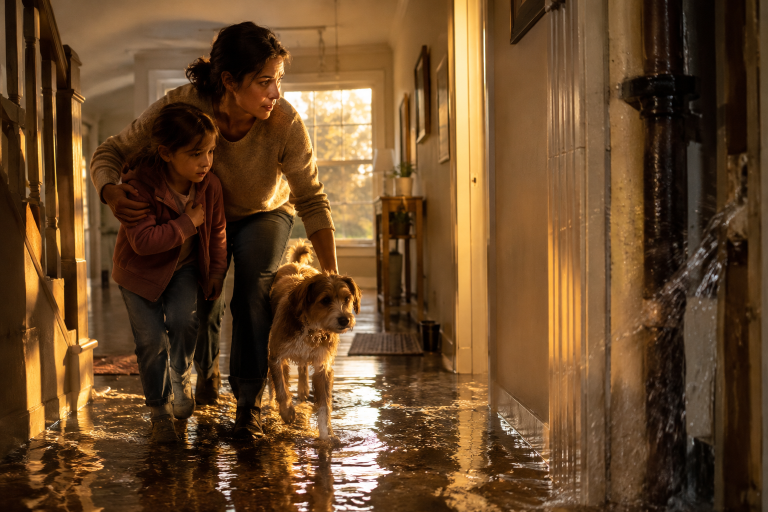
Use a battery-powered flashlight in dark spaces instead of candles or other open flames. Water can travel behind walls, beneath flooring, and into cabinets, so a surface that appears dry may still conceal hazards.
Step Two: Shut Off the Water When Safe
- For a leak from a toilet, sink, or appliance, try the small shutoff valve near that fixture.
- If the source is unclear or water continues to spread, turn off the main water supply.
- Ask another household member to check nearby rooms for water spreading through ceilings, walls, or flooring.
- Do not use excessive force on a corroded or stuck valve.
- After the event, label the main valve location for future reference.
Every household should know where the main shutoff is located. Turning off the water quickly can prevent a continuous leak from causing substantially more damage while the source is assessed.
How To Respond to Common Emergencies
Burst Pipes and Major Leaks
Shut off the main water supply if possible. Move electronics, furniture, rugs, and stored belongings away from the water. Use buckets or towels only after confirming there is no electrical risk. Avoid opening walls or ceilings, since plumbing and wiring may be hidden inside.
Overflowing Toilets
Close the shutoff valve behind the toilet. If water continues entering the bowl, carefully lift the tank lid and raise the float. Do not flush again until the blockage is addressed. If multiple drains are backing up, stop using sinks, showers, dishwashers, and washing machines because the issue may involve a larger drain line.
Sewage Backups
Keep people and pets away from wastewater, and stop using all water fixtures. Do not mix cleaners or pour chemical drain products into a backed-up system. The safety guidance for a flooded home warns that standing water can involve sewage, mold, and electrical hazards, all of which require caution.
Leaking Water Heaters
Stay clear of hot water and steam. If the valve is clearly accessible, shut off water to the unit. Turn off the unit’s energy source only when the controls are labeled and can be reached safely. Do not attempt to repair a damaged tank that may still be under pressure.
Electrical Safety Around Water
Never touch outlets, switches, cords, or appliances while standing in water. Turn off power to the affected area only when the electrical panel can be reached from a completely dry location. Do not enter a flooded room to access the panel. Electrical equipment exposed to water should be evaluated before it is returned to use.
Limit Damage While Waiting for Help
- Remove small belongings from wet areas if it is safe to do so.
- Take wide photos of the room and close photos of the damaged fixture or pipe.
- Open cabinet doors and interior doors to improve airflow after electrical safety is confirmed.
- Use fans, dehumidifiers, or a wet-dry vacuum only when the area is safe from electrical hazards.
- Keep receipts for supplies, temporary repairs, and cleanup services.
Moisture should be addressed promptly. The EPA advises that drying water-damaged areas and items within 24 to 48 hours can help prevent mold growth. Water that reached drywall, insulation, flooring, or cabinetry may remain hidden even after the visible surface feels dry.
When To Avoid Do-It-Yourself Cleanup
Do not rely on a simple cleanup when sewage or contaminated water is present, electrical equipment has been wet, a source of the leak cannot be found, or water has entered walls, ceilings, insulation, or flooring. The same applies when mold covers a large area, keeps recurring, or involves an HVAC system. Stopping the visible leak is important, but it does not necessarily resolve concealed moisture or damage.
Information To Gather Before Calling for Help
- Your address and a callback number.
- When the problem began and what was happening at the time.
- Whether the fixture valve or main water supply has been shut off.
- Whether sewage, electricity, gas, or standing water is involved.
- The affected rooms, fixtures, and visible damage.
- Photos, videos, recent repairs, remodeling, or unusual water-pressure changes.
Frequently Asked Questions
Should I shut off the main water supply?
Yes, when water is flowing freely, the source is unknown, or a fixture shutoff does not stop the leak. Only do so if the valve can be reached safely.
Is a slow drain always an emergency?
No. It becomes urgent when several fixtures back up at once, water will not drain, or wastewater enters living areas.
Can wet drywall be saved?
It depends on how long it was wet, the type of water involved, and whether swelling, deterioration, or mold is present. Hidden moisture may require further assessment.
Focus on Safety First
A plumbing emergency is easier to manage when the response follows a clear order: protect people and pets, stop the water when safe, avoid electrical risks, document the damage, and seek qualified help for major flooding, sewage, gas, or hidden moisture. A little preparation can make an unexpected plumbing problem less stressful and less damaging.